A visual overview of why Nigerian businesses should prepare for stronger cybersecurity compliance requirements.
Nigeria’s proposed cybersecurity framework could change how organisations approach cyber risk, regulatory readiness, and security spending. For businesses operating in Nigeria, this is more than a policy update. It is an early warning that cybersecurity compliance in Nigeria is becoming more structured, more enforceable, and more urgent.
In February 2026, the Director-General of the National Information Technology Development Agency (NITDA), Kashifu Inuwa Abdullahi, said the Federal Government is developing a national cybersecurity framework that will require organisations in Nigeria to meet minimum cybersecurity spending thresholds and comply with related reporting and response requirements . For banks, fintechs, telecoms companies, government agencies, SaaS providers, and other data-driven organisations, the message is clear: cybersecurity is moving from a best practice to a stronger operational expectation.
For businesses that want to prepare early, this is the right moment to review their security posture, close obvious gaps, and align technical controls with compliance obligations.
Why Nigeria’s Cybersecurity Framework Matters
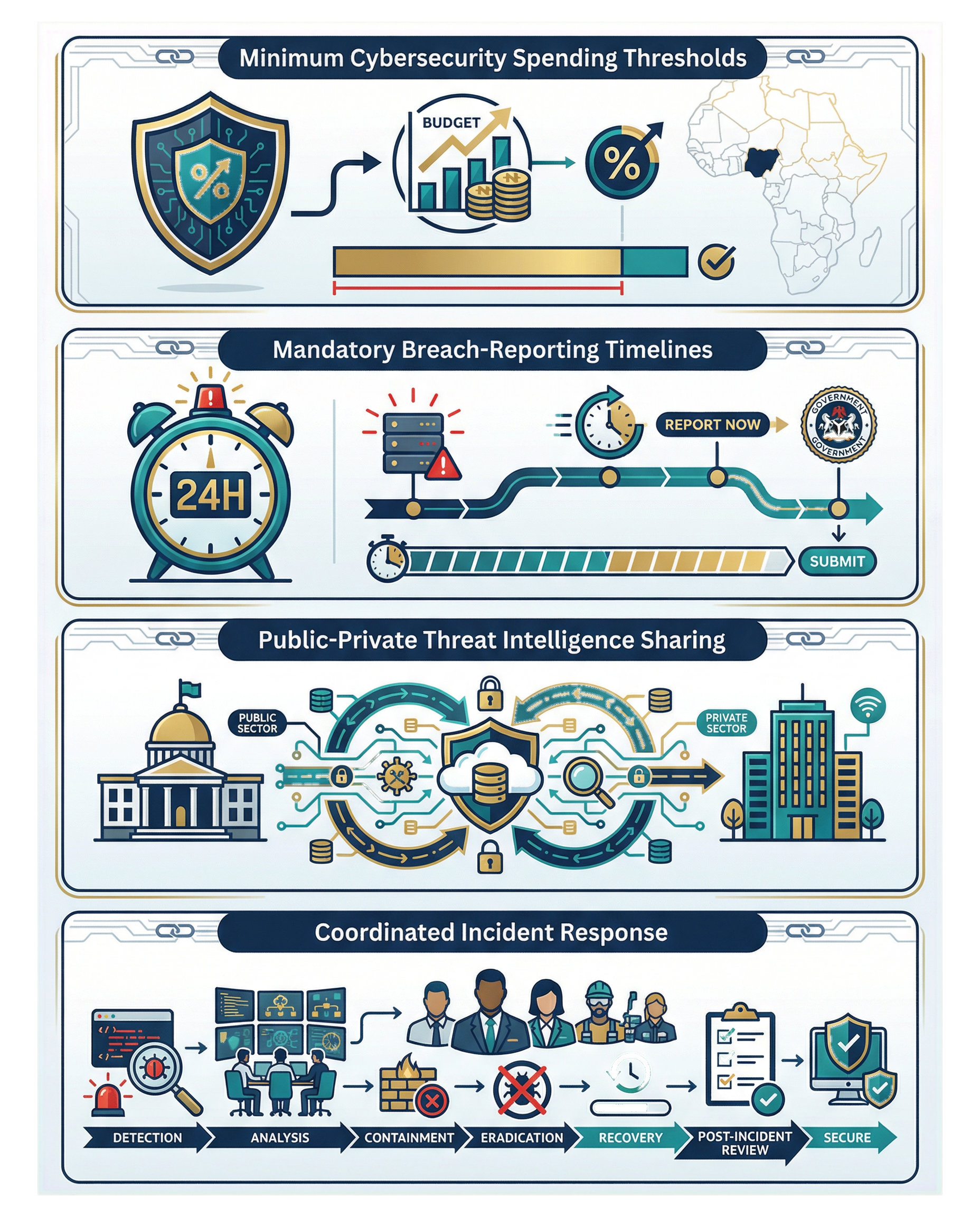
Nigeria’s digital economy has expanded rapidly, but cyber resilience has not always kept pace. According to reporting on the planned framework, the policy is intended to respond to growing cyber threats affecting banks, businesses, and government agencies . The same report notes that the framework is expected to introduce minimum cybersecurity spending requirements, breach-reporting timelines, threat intelligence sharing, and coordinated response protocols for major incidents .
This matters because many businesses still treat cybersecurity as a secondary priority until an audit, regulatory inquiry, or security incident forces action. That reactive model is expensive. It exposes organisations to financial losses, operational disruption, reputational damage, and compliance risk.
For many companies, especially startups and growing digital businesses, the better strategy is to treat this regulatory shift as an opportunity to build a more resilient foundation now.
What the Proposed Framework Is Expected to Require
Although the final rules have not yet been published, early reports suggest that the framework may introduce several core obligations for organisations operating in Nigeria .
| Expected requirement | Business impact |
| Minimum cybersecurity spending thresholds | Businesses may need to budget more deliberately for security controls, assessments, and monitoring. |
| Mandatory breach-reporting timelines | Organisations may need formal incident response procedures and clear reporting workflows. |
| Public-private threat intelligence sharing | Security teams may need stronger processes for threat visibility and coordination. |
| Coordinated cyber incident response protocols | Businesses may need documented response plans for large-scale or high-impact events. |
For companies that have not yet invested in structured security programs, these changes could create both compliance pressure and operational strain.
Which Businesses Should Start Preparing Now?
The organisations most likely to feel the impact first are those that process sensitive data, support digital transactions, or operate critical business systems. That includes banks, payment platforms, fintech companies, telecoms providers, e-commerce businesses, software platforms, logistics operators, health organisations, and public-sector contractors.
Even businesses outside highly regulated sectors should pay attention. If your organisation stores customer data, uses cloud platforms, manages employee records, or depends on web and mobile applications, your cybersecurity posture already affects your regulatory and business risk profile.
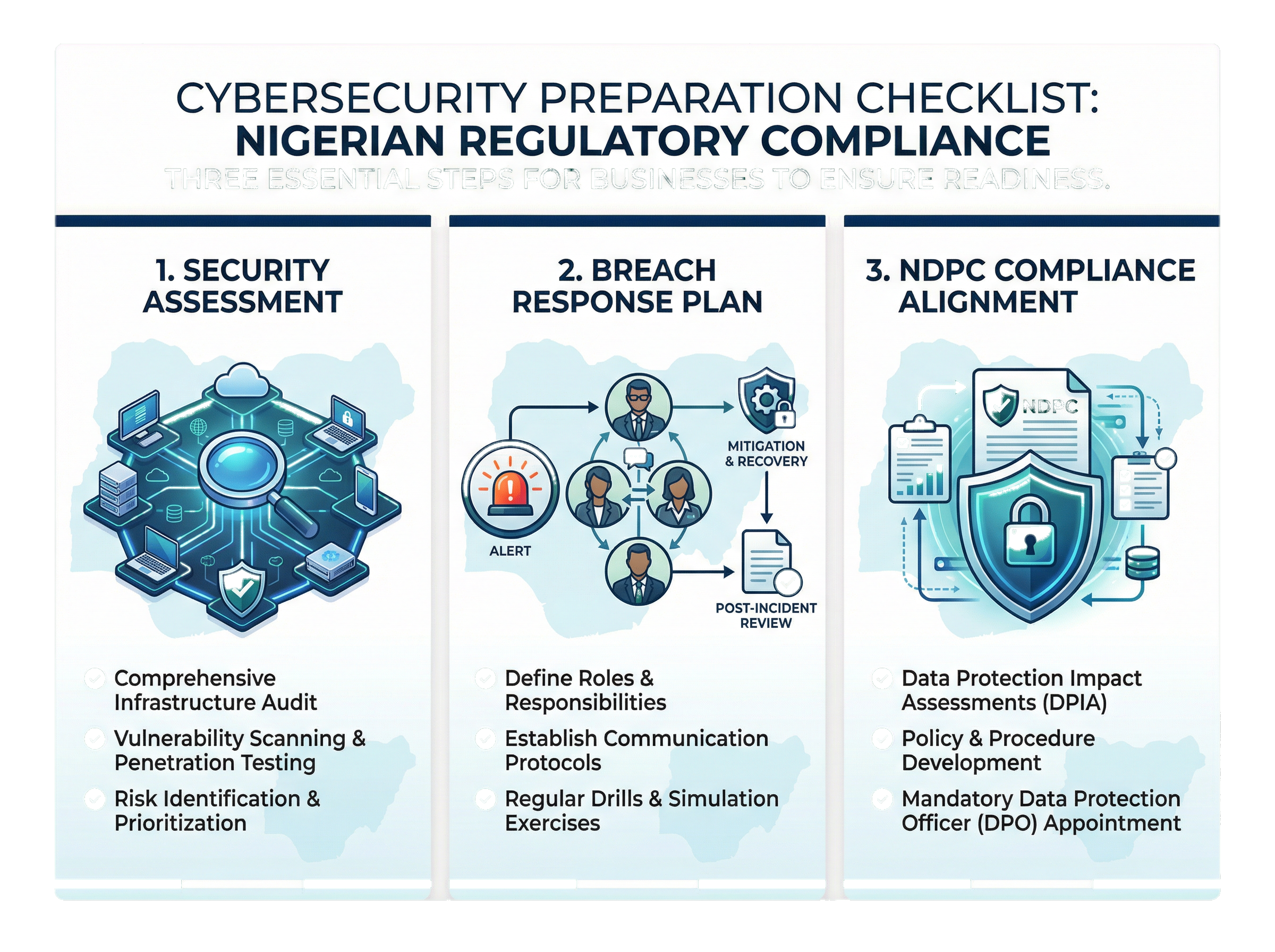
Three Practical Steps Businesses in Nigeria Should Take Now
The smartest response is not to wait for the final mandate. Businesses can begin strengthening their cybersecurity readiness immediately.
1. Conduct a Security Assessment
A security assessment is the fastest way to understand your current exposure. It helps identify vulnerabilities, weak controls, misconfigurations, and process gaps before a regulator or an attacker finds them first.
For businesses that need help with this process, 6030 Technologies provides cybersecurity services in Nigeria including penetration testing, security assessments, and vulnerability management .
2. Build a Breach Response Plan
If mandatory breach-reporting timelines become part of the final framework, every business will need a more disciplined incident response process. That means deciding in advance who owns incident response, how incidents are escalated, what evidence must be preserved, and when disclosure obligations are triggered.
A breach response plan is not only a compliance tool. It is also an operational tool that reduces confusion, response delays, and avoidable damage during a live incident.
3. Align Cybersecurity With Data Protection Compliance
Cybersecurity and privacy compliance are becoming more interconnected in Nigeria. Businesses that improve security controls while also addressing Nigeria Data Protection Act compliance will be in a much stronger position operationally and regulatorily.
6030 Technologies also supports organisations with NDPC compliance assessment and broader data protection compliance services. As a licensed Data Protection Compliance Organisation (DPCO), the company helps businesses navigate the compliance lifecycle from assessment through ongoing obligations .
Why This Is an Opportunity for Business Leaders
Many organisations view cybersecurity regulation only as a cost. That is understandable, but incomplete. In practice, stronger cybersecurity can improve resilience, strengthen customer trust, reduce downtime, support partnership requirements, and make businesses more investment-ready.
Companies that act early are more likely to implement improvements in a deliberate and cost-effective way. Companies that wait until regulation is finalized often end up responding under pressure, paying more for emergency remediation, and taking on greater business disruption.
For startups and growth-stage businesses in particular, the most practical strategy is to build security into systems, products, and workflows now rather than retrofit it later.
How 6030 Technologies Can Help
6030 Technologies helps Nigerian businesses and foreign companies operating in Nigeria strengthen their cybersecurity posture through penetration testing, vulnerability management, security assessments, secure application development, advisory services, and data protection compliance support .
If your organisation wants to prepare for Nigeria’s proposed cybersecurity framework, this is a good time to evaluate your controls, identify vulnerabilities, and close compliance gaps before they become urgent.
If you need a penetration test, security assessment, or NDPC compliance support, schedule a consultation with 6030 Technologies.
Frequently Asked Questions
What is Nigeria’s proposed cybersecurity framework?
Nigeria’s proposed cybersecurity framework is an emerging regulatory initiative intended to strengthen cyber resilience across sectors. According to reporting on the announcement, it is expected to include minimum cybersecurity spending thresholds, breach-reporting timelines, threat intelligence sharing, and coordinated response measures .
Will businesses in Nigeria be required to spend more on cybersecurity?
Based on early reporting, organisations operating in Nigeria may be required to meet minimum cybersecurity spending thresholds once the framework is finalized and implemented . The exact thresholds have not yet been published.
How can companies prepare for new cybersecurity compliance rules in Nigeria?
Companies can begin by conducting a security assessment, creating an incident response plan, and aligning cybersecurity controls with privacy and data protection obligations. These steps improve both operational resilience and regulatory readiness.
What is the connection between cybersecurity and NDPC compliance?
Cybersecurity helps protect the systems and data that privacy laws are designed to govern. In practice, businesses that combine technical security measures with data protection compliance are usually better prepared for audits, incidents, and evolving regulatory obligations.
References
[1] FG to launch cybersecurity framework to combat rising AI-driven attacks – Nairametrics
[2] 6030 Technologies Services | Cybersecurity Services: Pentesting, Secure Dev & NDPC Compliance