Cybersecurity Risks in Nigeria’s Digital Transformation. Navigating Threats Across Government and Private Sector.
KEY TAKEAWAYS
• Nigeria’s rapid digital transformation has created significant cybersecurity vulnerabilities across both government and private sectors.
• Insufficient funding and outdated infrastructure leave Nigerian organisations exposed to sophisticated cyberattacks, including ransomware and data breaches.
• Effective cybersecurity requires coordinated efforts between policy implementation, technological investment, and proactive threat mitigation strategies.
Nigeria’s Digital Revolution Has a Dangerous Blind Spot
Nigeria is in the middle of one of the most ambitious digital transformations on the African continent. From government e-services and digital identity systems to mobile banking and fintech innovation, the country is moving fast. But speed, without security, is a vulnerability. As Nigeria races to close the digital gap with the rest of the world, cybercriminals are not standing still. They are adapting, accelerating, and exploiting every new crack in the country’s digital infrastructure.
The numbers tell a sobering story. African organisations face a $22 billion funding gap in cybersecurity infrastructure, and Nigeria bears a significant share of that shortfall. Nigerian businesses and government institutions have lost billions to cyberattacks in recent years. Ransomware shuts down operations. Data breaches expose millions of citizens. Phishing scams drain bank accounts overnight. And yet, digital adoption continues to outpace digital protection at every level.
Understanding these risks is not just an IT issue. It is an economic issue, a national security issue, and a public trust issue. This article breaks down the key cybersecurity threats facing Nigeria’s government and private sector, examines the regulatory landscape trying to keep pace, and outlines what a stronger, more resilient digital Nigeria actually looks like.
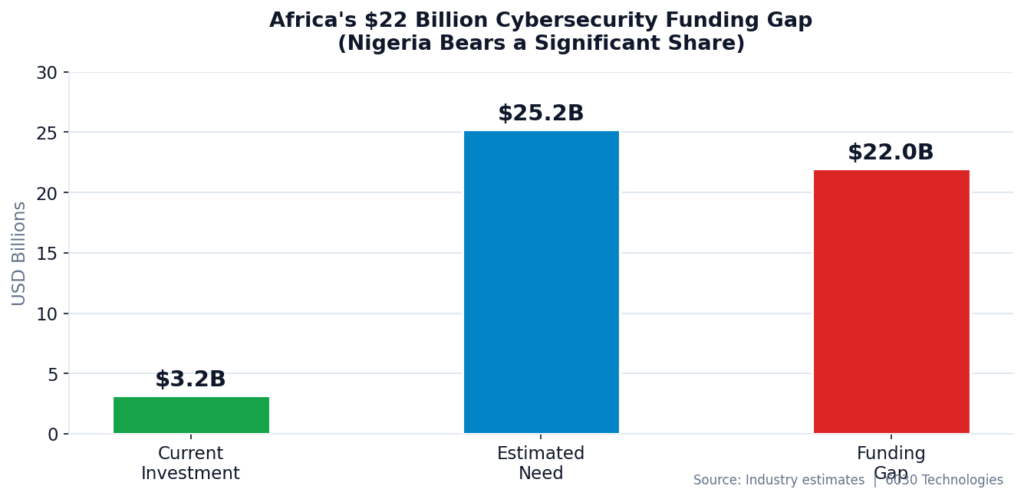
Figure 1: Africa’s $22 Billion Cybersecurity Funding Gap — Nigeria bears a significant share of the shortfall
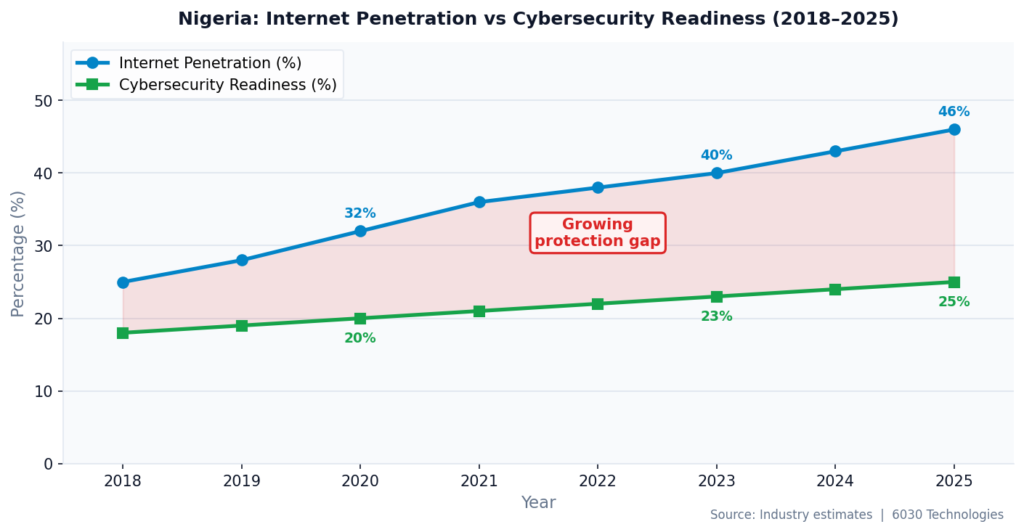
Figure 2: Nigeria’s Internet Penetration vs Cybersecurity Readiness (2018-2025) — the protection gap is widening every year
The $22 Billion Problem: Why Nigeria’s Digital Growth Outpaces Its Defences
Nigeria’s rapid digital expansion has not been matched by equivalent investment in cybersecurity. The result is a growing attack surface, an underfunded defence posture, and a population of businesses and citizens exposed to increasingly sophisticated threats.
Government Under Siege: Why Hackers Are Targeting Nigeria’s Public Sector First
Government agencies in Nigeria are attractive targets for cybercriminals precisely because they hold so much sensitive data. Citizen identity records, tax information, health data, and law enforcement databases are all high-value targets. As these agencies move their operations online, they bring that data with them, often without the security infrastructure to protect it.
The challenges are structural. Many public sector institutions run on legacy IT systems that were never designed to handle modern cyber threats. Budget constraints prevent agencies from hiring qualified cybersecurity professionals or investing in updated tools. Poor coordination between departments means that a vulnerability in one agency can become an entry point across the entire government network.
Key vulnerabilities include:
- Weak authentication systems for accessing government databases
- Insufficient encryption of sensitive citizen data
- Limited or no backup systems for critical infrastructure
- Poor inter-agency coordination on security protocols and incident response
According to the ng-CERT (Nigeria Computer Emergency Response Team), government institutions remain among the most frequently targeted entities in the country’s cyberspace.
Nigeria’s Businesses Are Going Digital Without Going Secure
The private sector faces a parallel crisis. Small and medium enterprises, which form the backbone of the Nigerian economy, are particularly exposed. They often lack the budget, expertise, or awareness to implement even basic cybersecurity measures, making them easy targets for ransomware attacks, data theft, and financial fraud.
Common private sector risks include:
- Inadequate employee training on identifying and responding to cyber threats
- Lack of regular security audits and software updates
- Insufficient investment in firewall protection and endpoint security
- Poor vendor management and unvetted third-party access to systems
More Users, More Threats: The Factors Turbocharging Nigeria’s Cyber Exposure
Regulatory enforcement remains inconsistent. Nigeria has established important frameworks, including the National Cybersecurity Policy and the ng-CERT, but implementation varies widely across sectors. The explosive growth of mobile banking and digital payments has also created new attack surfaces that criminals are actively exploiting.
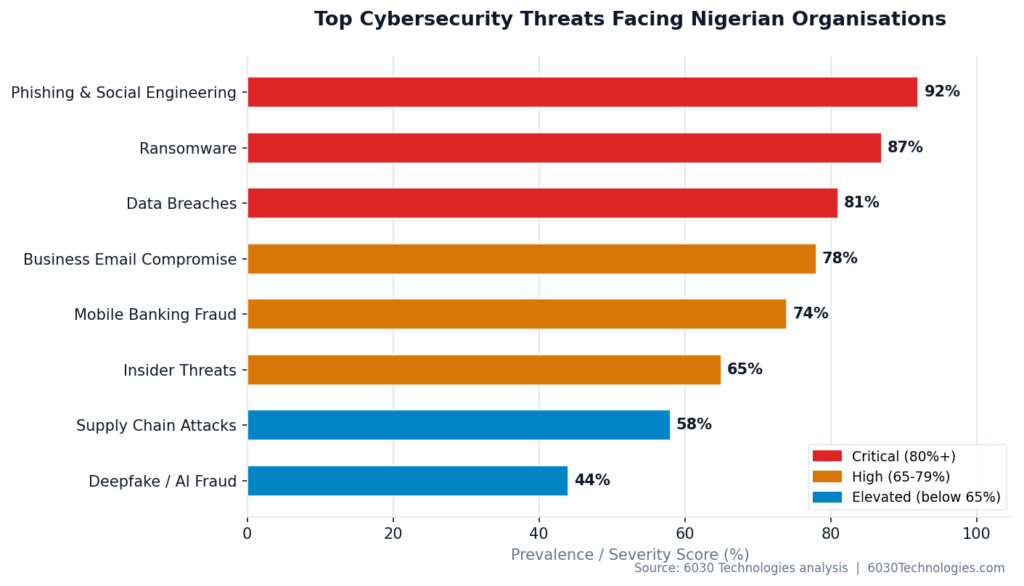
Figure 3: Top Cybersecurity Threats Facing Nigerian Organisations — prevalence and severity ranking
Digital Government, Analogue Security: The Gaps No One Wants to Talk About
Nigeria’s push toward digital public services represents a genuine leap forward for governance and citizen access. But behind the ambition lies a set of deep structural problems. Three issues stand out: outdated technology, inadequate protection for citizen data, and a connectivity gap that leaves millions locked out of digital services.
Old Systems, New Enemies: How Outdated Infrastructure Is Holding Nigeria Back
Many Nigerian government agencies still operate on IT systems that were built decades ago. These legacy systems were not designed with modern cybersecurity in mind. They struggle to communicate with newer platforms, creating interoperability problems and security blind spots.
NITDA (National Information Technology Development Agency) has identified digital infrastructure modernisation as a national priority, but funding and implementation timelines remain a significant challenge.
Your Data Is Out There: The Risks of Nigeria’s Digital Identity Push
The National Identity Management Commission (NIMC) maintains digital identity records for tens of millions of citizens. These databases are extraordinarily valuable to cybercriminals, containing names, addresses, biometric data, and financial identifiers.
While the Nigeria Data Protection Act (NDPA) of 2023 represents significant progress, enforcement remains uneven. Accountability for data breaches in the public sector is limited, which reduces the incentive for agencies to invest properly in data security.
You Can’t Secure What You Can’t Connect: Nigeria’s Broadband Divide
Only around 40 percent of Nigerians have reliable internet access. The Nigerian Communications Commission (NCC) continues to work on expanding broadband penetration, but progress in underserved and rural areas remains slow.
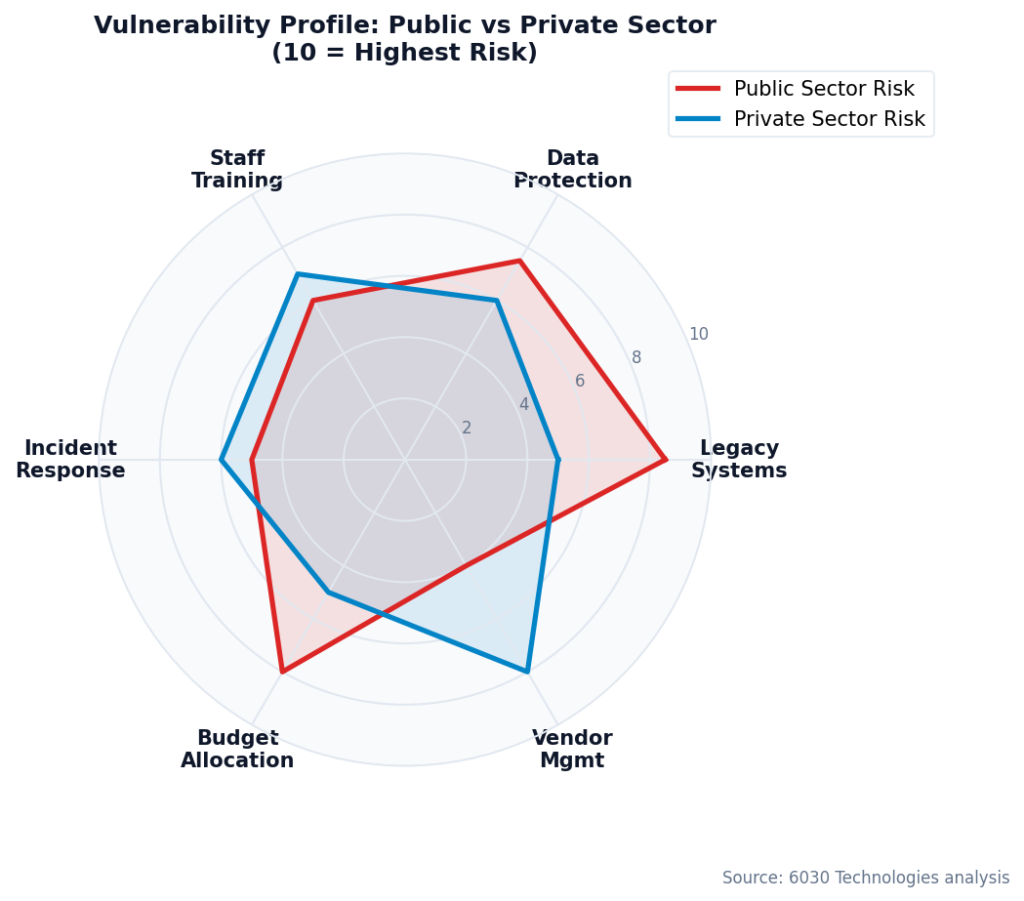
Figure 4: Vulnerability Profile Comparison — Public Sector vs Private Sector across six key risk dimensions
Open for Business, Open for Attack: Cyber Threats Hitting Nigeria’s Private Sector
Nigeria’s Fintech Boom Is a Goldmine. For Hackers.
The Central Bank of Nigeria (CBN) has issued Risk-Based Cybersecurity Frameworks for financial institutions, but compliance is uneven and many smaller fintech operators fall outside the scope of meaningful oversight.
Common attacks targeting Nigeria’s financial services sector include:
- Account takeovers through stolen or phished credentials
- Business email compromise schemes targeting wire transfers and executive impersonation
- Mobile banking malware that intercepts one-time passwords and transaction codes
- Point-of-sale system breaches at retail and hospitality locations
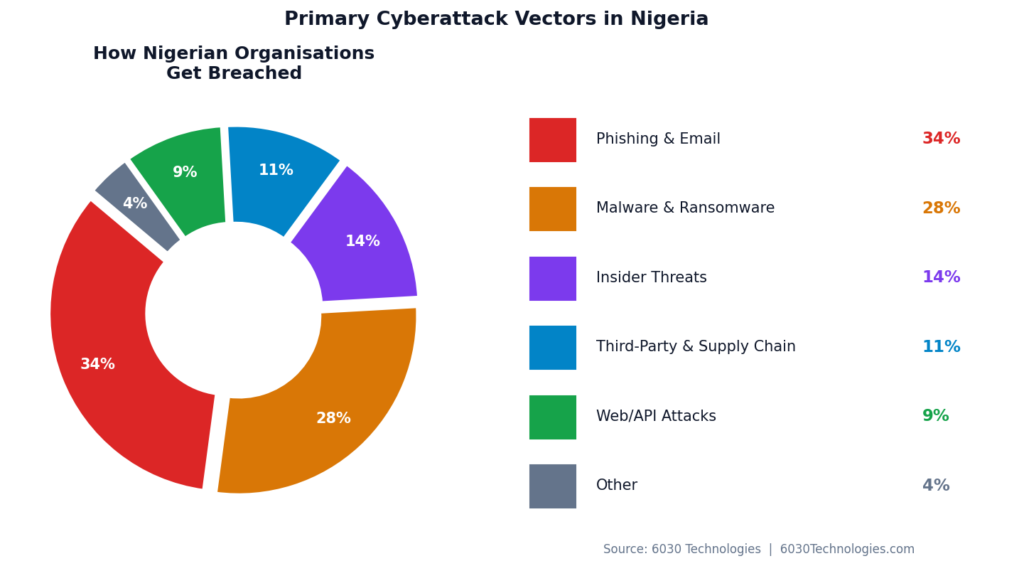
Figure 5: Primary Cyberattack Vectors in Nigeria – phishing and malware account for over 60% of all incidents
Your Vendors Are Your Weakest Link. And Criminals Know It.
A business’s cybersecurity posture is only as strong as its least secure vendor. Attackers routinely target smaller suppliers and service providers with weaker security controls, using them as a stepping stone into larger, more valuable organisations.
According to research from the European Union Agency for Cybersecurity (ENISA), supply chain attacks nearly quadrupled between 2020 and 2022. Nigerian businesses that rely on third-party software without rigorous vetting processes are particularly exposed.
The Enemy Within: When Your Own Staff Become a Security Risk
Not all cybersecurity threats come from outside an organisation. In Nigeria, businesses report a growing number of incidents involving employees who inadvertently or deliberately compromise security. Disgruntled employees steal customer databases. IT administrators sell network access to criminal networks. Poor access controls amplify the damage at every level.
Nigeria Has Cybersecurity Laws. So Why Aren’t They Working?
NDPA, NITDA, and the Cybercrimes Act: What the Law Actually Says
The Cybercrimes (Prohibition, Prevention, Etc.) Act of 2015 is Nigeria’s primary cybersecurity legislation. It criminalises a range of cyber offences including unauthorised system access, identity theft, and cyberstalking.
The Nigeria Data Protection Act (NDPA), which came into force in 2023, significantly strengthened the country’s data protection framework. The Nigeria Data Protection Commission (NDPC) is responsible for enforcement. For guidance on compliance, the NITDA official website provides current regulatory frameworks and compliance resources.
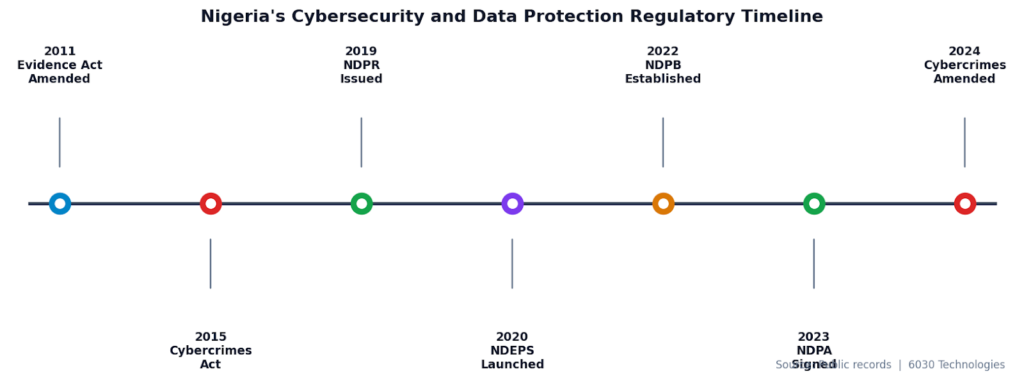
Figure 6: Nigeria’s Cybersecurity and Data Protection Regulatory Timeline — from the Evidence Act amendment in 2011 to the Cybercrimes Amendment in 2024
Nigeria’s Digital Economy Ambitions: The 2030 Vision and Its Security Gaps
Nigeria’s National Digital Economy Policy and Strategy (NDEPS), launched in 2020, sets out the country’s ambition to become a leading digital economy in Africa by 2030. A National Digital Identity Management System, overseen by the National Identity Management Commission (NIMC), has also been introduced to reduce fraud and improve service delivery across government platforms.
The Enforcement Problem: When Policy Exists But Nobody Is Watching
The most significant challenge in Nigeria’s cybersecurity regulatory landscape is not the absence of rules. It is the inconsistency of enforcement. Financial institutions face relatively stringent oversight from the Central Bank of Nigeria (CBN). Other industries operate with far less scrutiny, leaving a fragmented regulatory landscape across NITDA, the NDPC, and the ng-CERT.
AI, Deepfakes, and Open Banking: The Next Wave of Cyber Threats Is Already Here
Deepfakes Are Coming for Nigerian Businesses. Are You Ready?
Artificial intelligence has fundamentally changed the threat landscape for social engineering attacks. Deepfake technology is now accessible to criminal networks at scale. Attackers are using AI-generated video and voice cloning to impersonate business executives and government officials, tricking employees into authorising fraudulent transactions or surrendering sensitive credentials.
According to IBM’s Cost of a Data Breach Report, the average cost of a data breach globally now exceeds $4.4 million, a figure that reflects the increasing sophistication of AI-assisted attacks. Banks face particular exposure as voice cloning can bypass phone-based authentication systems.
Open Banking, Open Doors: How Nigeria’s Fintech APIs Became Attack Targets
Application Programming Interfaces (APIs) are increasingly targeted by attackers who understand that a weak API is an open door into an entire financial ecosystem. Many Nigerian financial institutions implement APIs without proper authentication controls or encryption, and the pressure to launch quickly frequently results in APIs being deployed before adequate security testing.
The Open Web Application Security Project (OWASP) publishes an API Security Top 10 list that Nigerian fintech operators and developers are strongly encouraged to use as a baseline for API security testing and design.
Working From Home, Leaking From Home: The Remote Work Security Crisis
The shift toward remote work has expanded the attack surface for Nigerian businesses in ways that many organisations have not yet fully addressed. Cloud misconfigurations are among the most common causes of data breaches in organisations that have moved infrastructure online. The specialist expertise needed to configure and maintain cloud security properly is in short supply across Nigeria’s technology sector.
How Nigeria Wins This Fight: A Roadmap to Cyber Resilience
When an Attack Hits, Every Second Counts: Building Incident Response That Works
Effective incident response begins long before an attack occurs. Organisations need clearly documented response plans that are regularly tested. The ng-CERT Incident Reporting Portal provides a channel for reporting incidents and accessing national-level guidance on response protocols.
Cyber resilience means designing systems to withstand attacks and continue operating under adverse conditions. This means layered security controls, redundant infrastructure, zero-trust access principles, and a culture of continuous security improvement.
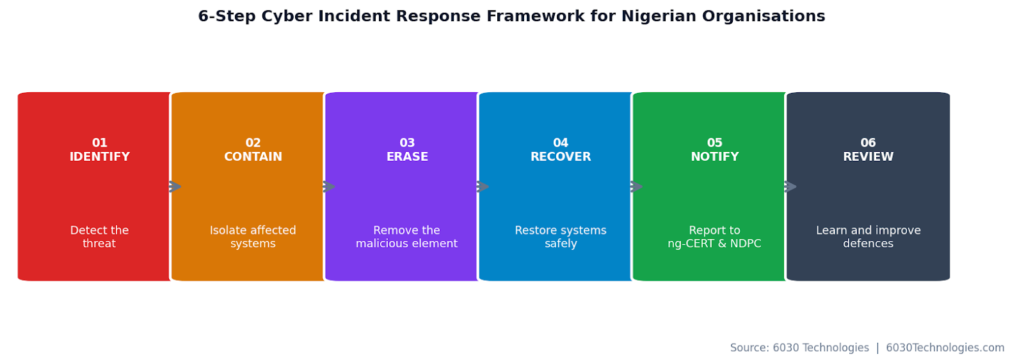
Figure 7: 6-Step Cyber Incident Response Framework – every Nigerian organisation should have this plan documented and regularly tested
Nigeria Can’t Win Alone: Why Government and Business Must Fight Together
Nigeria has established frameworks for collaboration through NITDA and related agencies. Businesses should report novel threats to the ng-CERT, protecting the entire ecosystem. International partnerships through bodies such as the Global Forum on Cyber Expertise (GFCE) bring global best practices and threat intelligence to local defences.
The Human Firewall: Training Nigeria’s Next Generation of Cyber Defenders
Professional certifications from bodies such as (ISC)2 and CompTIA validate practitioner skills and create industry standards. NITDA’s digital literacy initiatives provide accessible entry points for Nigerians building foundational technology and security skills. A digitally aware population is itself a form of national cybersecurity infrastructure.
The Cost of Inaction Is Higher Than the Cost of Preparation
Nigeria’s digital future is not in question. The country will continue to go online, and its economy, government, and citizens will be better for it. The question is whether that digital future will be built on a foundation that is secure enough to sustain it.
The gap between Nigeria’s digital ambitions and its cybersecurity capabilities is a solvable problem. It requires investment, coordination, political will, and a shift in how organisations think about security. Not as a cost, not as an afterthought, but as a fundamental condition for digital growth.
Cybercriminals are not waiting for Nigeria to catch up. The organisations that take cybersecurity seriously now will be the ones that thrive as Nigeria’s digital economy matures.
Protect your organisation with 6030 Technologies Secure Probe. Our AI-Powered Security Platform provides real-time threat detection, automated response, and NDPC compliance support for Nigerian businesses and government institutions. Book a free security assessment at 6030Technologies.com
6030 Technologies | 6030Technologies.com | #AISecurityPlatform #NigeriaCybersecurity #NDPACompliance